Mental & behavioral health · Support
Ease
Support for how you feel.
Stress, anxiety, depression, substance-use concerns
Ease is the Tether Health program for mental and behavioral health. Its role is support and routing to qualified people — not therapy, and not crisis care. The safety routing on every page of this site exists because of areas like this one.
See it
See Ease.
Three screens from the app design: home, the main action, and what happens if you go off plan.
Read the video script
Ease is the Tether Health program for mental and behavioral health.
Home offers a 30-second mood check-in, your own safety plan, and help right now.
A mood check-in asks how you are and what is going on, and can suggest a short grounding exercise.
A hard week doesn't undo anything. Your safety plan and a person stay one tap away. If you are in crisis, call or text 988.
The video ends with an invitation to get early access.
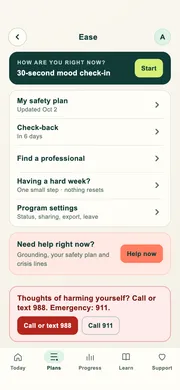
HomeEase home 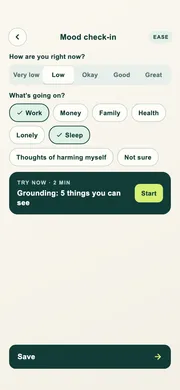
The main actionMood check-in 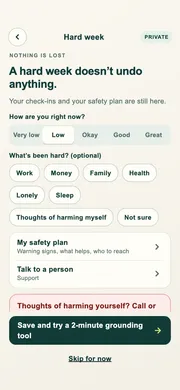
If you go off planHard week
Mental & behavioral health
What it is
Mental and behavioral health includes stress, anxiety, low mood and depression, and concerns about substance use. These are common, they affect how people feel, think and cope day to day, and they are not a personal failing.
Common contributing factors include ongoing stress, money or work pressure, loneliness, poor sleep, physical illness, major life changes, and family history. Support from a qualified professional can help.
Learn more
Public health sources, on their own websites.
- Mental health topicsNational Institute of Mental Health
- 988lifeline.org988 Suicide & Crisis Lifeline
In the app
What the app helps with
Optional screener
Short validated questions (PHQ-2 and GAD-2) that you can skip. The result is a prompt to talk to someone, never a diagnosis.
Safety plan
A plan for hard moments based on the Stanley-Brown safety plan: warning signs, what helps and who to reach. It is kept on your phone, and only you can see it.
Mood check-in and grounding
A 30-second check-in and a two-minute grounding tool: breathing and noticing five things you can see.
Help now and check-back
Grounding, your safety plan and a person, one tap from the crisis screen (988 and 911), and a check-back after two weeks.
Hard week
If you go off plan: the recovery plan
The hard week screen opens with “A hard week doesn’t undo anything.” These are its steps.
How are you right now?
From very low to great.
What's been hard? (optional)
Work, money, family, health, lonely, sleep, thoughts of harming myself, or not sure.
My safety plan or talk to a person
Both are one tap away on this screen.
Save and try a 2-minute grounding tool
Your check-ins and your safety plan are still here.
Thoughts of harming yourself: call or text 988. In an emergency, call 911. Ease is support and routing, not therapy or crisis care.
What it includes
The areas Ease covers.
Every part of Ease follows the same principles as the rest of Tether Health: private by design, no judgment, and a route to a real person.
Screening
Validated screening instruments used as a prompt to seek help, never as a diagnosis.
Support resources
Reviewed self-management material for the periods between appointments.
Referral to qualified professionals
Clear, fast routes to qualified people, and unambiguous escalation to emergency services when that is what is needed.
Crisis routing
Unambiguous escalation to emergency services and crisis lines, designed before anything else in this area.
Tether Health supports everyday self-care and does not diagnose, treat or replace your clinician.
See all programs and what each one does.
Early access
Be among the first to use Ease.
Ask for early access and we will email you an invite when there is a place.